
Choosing a family-friendly hotel goes far beyond a pool and a cot — this guide walks you through every factor that matters, from room configurations and dining flexibility to kids' clubs, safety standards, and the hidden costs that catch families off guard.
Traveling with children raises the stakes on accommodation. A room that works perfectly for two adults can feel impossibly cramped with a toddler, a school-age child, and a mountain of gear. A beautiful resort can turn stressful if mealtimes are rigid, the pool has no shallow end, or the nearest pharmacy is an hour away. Getting the hotel decision right sets the tone for the entire trip, while getting it wrong is expensive and hard to fix once you arrive.
This guide breaks down what genuinely matters when evaluating and booking hotels for families — practical criteria you can apply whether you are planning a beach holiday, a city break, or an adventure-base stay.
What "Family-Friendly" Actually Means
The phrase appears on nearly every hotel's marketing page, yet it means different things in different contexts. A boutique property might call itself family-friendly because it keeps a jar of cookies at reception. A large resort earns the label through dedicated children's programming, multiple pool types, and family suites. Before you search, define what your family specifically needs:
- Ages and mobility of your children
- Whether you need structured kids' activities or simply space and quiet
- Dietary requirements or feeding schedules for very young children
- How much time you plan to spend at the hotel versus out exploring
Answering these questions first prevents you from being swayed by amenities you will never use.
Room Configurations: Space Is Non-Negotiable
The most common planning mistake families make is underestimating how much room they need. A standard double or king room designed for two adults becomes chaotic with children added in. Look carefully at the actual sleeping arrangement before booking.
Room types worth knowing
- Interconnecting rooms: Two separate rooms with a shared internal door. Adults get privacy; children have their own supervised space. Ideal for families with older kids or multiple children.
- Family suites: A single reservation that includes a separate sleeping area or pull-out sofa section. More integrated than interconnecting rooms — better for younger children you want close by.
- Apartments and serviced apartments: Full kitchens, multiple bedrooms, and living areas. More expensive per room but often cheaper than booking multiple hotel rooms, and invaluable for families with infants who nap on schedules.
- Standard room with rollaway or crib: The most affordable option, but genuinely only workable for one small child and only if the room is a generous size. Always confirm the actual square footage.
When booking, call or email the hotel directly to confirm the rollaway or crib policy, associated fees, and whether the room can physically accommodate the extra furniture without blocking the fire exit.
Pools and Water Facilities
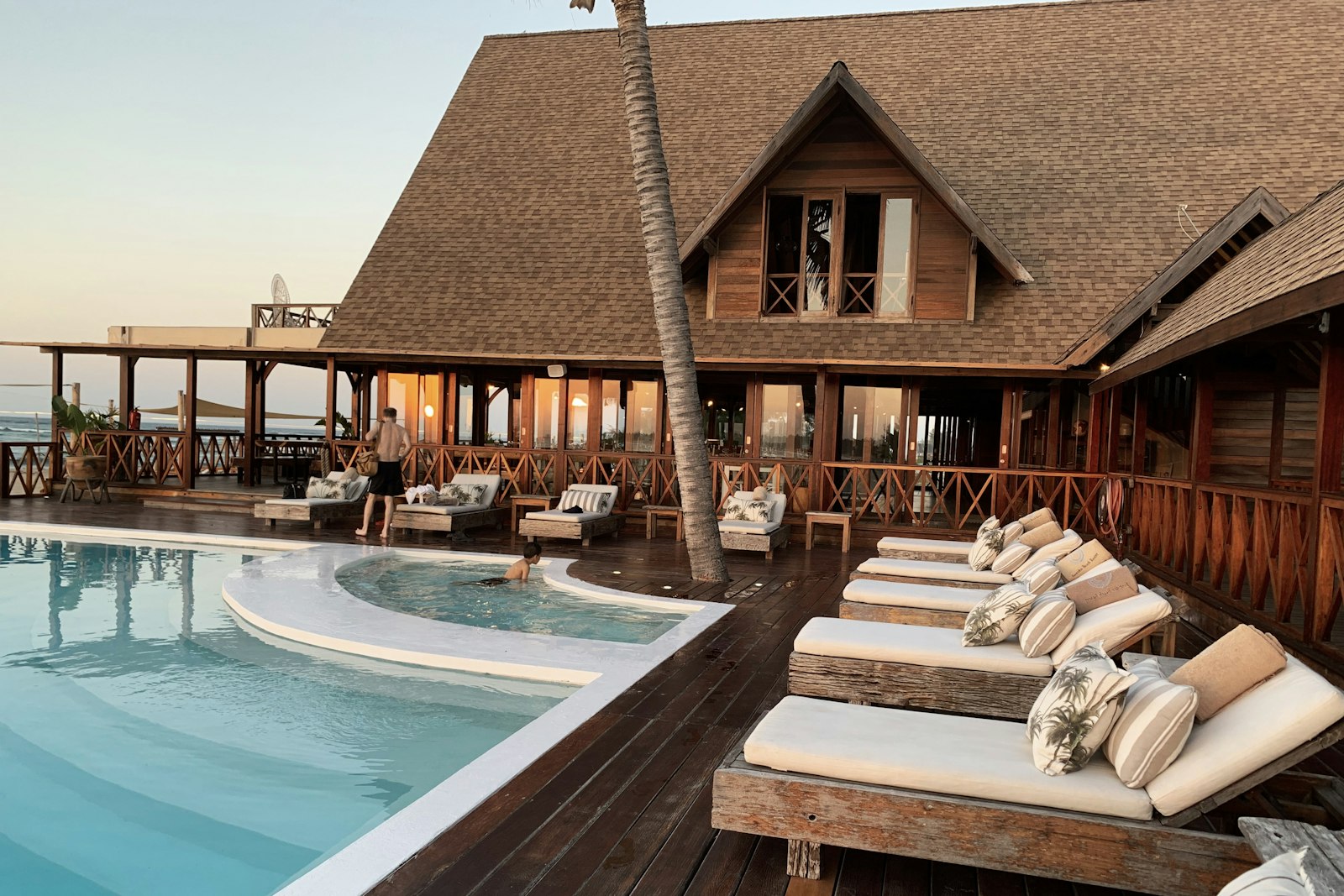
For many families, the pool is the centerpiece of a hotel stay. A single deep lap pool serves a very different purpose than a multi-zone aquatic area with a shallow splash section for toddlers, a slide for older children, and a calm adult area.
- Ask specifically whether there is a dedicated shallow pool or splash pad for young children.
- Check lifeguard hours — many hotel pools have lifeguards only during set hours, leaving the pool unsupervised at other times.
- Look at pool photos critically: a pool that appears large in marketing images can be small in reality.
- If the hotel is near the ocean, check whether the beach has a lifeguard service and what the water conditions are typically like for the season you are visiting.
Kids' Clubs and Children's Programming
A well-run kids' club is transformative for family holidays. It gives children structured fun with peers their own age and gives parents genuine downtime — something in short supply when traveling with young children.
Questions to ask before booking
- What are the age ranges accepted, and are there different groups by age?
- What are the operating hours, and is the club included in the room rate or charged separately?
- What is the staff-to-child ratio, and are staff trained in first aid and child supervision?
- Is the club indoors, outdoors, or both — and what happens if it rains?
- Are children supervised during lunch, or do they need to return to parents at mealtimes?
Even if you do not intend to use the kids' club every day, a hotel that invests in quality programming for children typically pays attention to family needs across the board.
Dining Flexibility and Food Options
Rigid dining schedules and limited menus are among the top complaints from traveling families. Young children often eat earlier than restaurant service begins. Picky eaters need at least a few plain options. Babies and toddlers need somewhere to warm food.
- Look for hotels with an all-day dining option or at least a casual restaurant or bar menu that runs from morning to late evening.
- Confirm whether the hotel can accommodate high chairs and whether they have enough of them for peak times.
- Buffet-style restaurants often work better for families than à la carte — children can see and choose food, and there is less waiting.
- If you are staying in a serviced apartment or suite with a kitchen, scope out the nearest supermarket before you arrive using the hotel's neighborhood information or the destination page on TravelerPulse.pro.
- Clarify in advance whether the hotel can heat baby food or provide a bottle-warming service.
Safety and Child-Proofing
Hotels are not designed with toddlers in mind as a default. A little advance research prevents a lot of anxiety on arrival.
- Balcony railings: In many destinations, older properties have low or widely spaced balcony railings that present a real hazard for young children. Ask specifically about balcony configurations and whether ground-floor rooms are available as an alternative.
- Electrical outlets: Some hotels, particularly in older buildings, have uncovered outlets at child height. Pack outlet covers if you are traveling with toddlers.
- Sharp furniture corners: Boutique hotels with minimalist design often feature glass and metal furniture. A padded family-focused resort will typically have considered this already.
- Pool fencing and gate latches: In destinations where regulations require pool fencing, verify that gates are self-latching and in good repair.
- Emergency proximity: Know where the nearest hospital or urgent care facility is. Many travel insurance policies and some hotel concierge teams can help identify this.
Location and Logistics
A hotel that requires a long taxi ride to reach any restaurant, beach, or activity creates daily logistical headaches with children in tow. Conversely, a hotel in a busy city center may mean navigating heavy traffic and noise with tired kids.
- For resort destinations, an on-site or walking-distance beach, restaurants, and activities removes the need for constant transfers.
- For city trips, look for hotels close to the attractions you plan to visit most. A central location with a park or open space nearby is a significant advantage.
- Check whether the hotel provides airport transfers equipped for car seats, or whether you will need to arrange your own. In many countries, taxi and ride-share vehicles are not legally required to provide child car seats — plan accordingly.
- If you are renting a car, confirm whether the hotel has parking and what it costs.
Hidden Costs and Fees to Watch For
The advertised room rate rarely tells the full financial story. Families are particularly exposed to additional charges because they use more services and more space.
- Crib and rollaway fees: Often charged per night, sometimes at surprisingly high rates.
- Kids' club fees: May be charged per session, per day, or per child. Confirm whether the cost is capped.
- Resort fees: A daily charge applied in many resort destinations that may or may not include the amenities families care about. Ask what is covered before booking.
- Children's meal charges: Some all-inclusive properties charge a reduced rate for children but do not make this obvious at the point of booking. Others include children's meals entirely — confirm which applies.
- Extra-person fees: Hotels typically price rooms for two adults. Adding children, even in a family room, sometimes triggers a per-person surcharge.
Loyalty Programs and Family Benefits
Many major hotel groups offer benefits for families through their loyalty programs — complimentary room upgrades when available, late checkout to manage nap schedules, and free stays for children under a certain age. If you travel several times a year, concentrating stays with one or two hotel groups to build status can yield meaningful practical benefits. Check individual program terms, as family benefits vary significantly between brands and even between properties within the same brand.
Reading Reviews the Right Way
Not all positive reviews are useful. A review from a couple on a romantic trip tells you little about how a hotel performs for a family with a five-year-old. When reading reviews, filter specifically for guests who traveled with children and look for recurring themes rather than isolated comments. Pay attention to reviews that mention the age of the children — what works for a ten-year-old is not necessarily suitable for a toddler.
Look for reviews that comment on noise levels (thin walls matter more with children who need to sleep early), responsiveness of staff to family needs, and actual condition of family-specific facilities like kids' clubs and pool areas.
Using TravelerPulse.pro to Plan Your Family Stay
Once you have shortlisted properties, use My Travel Hub on TravelerPulse.pro to keep your accommodation research, confirmation numbers, and itinerary in one organized place — particularly useful when managing the complexity of a multi-destination family trip. If your plans involve international travel, the /visas section provides guidance on passport and visa requirements for each destination, including considerations relevant to children traveling on their own passports or under parental documentation.
Frequently Asked Questions
At what age do hotels typically charge for children?
Policies vary widely. Many hotels allow children under twelve to stay free in an existing room, while others set the threshold at two, four, or sixteen years old. All-inclusive resorts often have their own graduated pricing by age bracket. Always confirm the children's policy — and the exact ages it applies to — directly with the hotel before booking.
Is an all-inclusive resort always the best choice for families?
Not necessarily. All-inclusive resorts suit families who want predictable costs, multiple dining options on-site, and structured entertainment. However, they can feel repetitive over longer stays and often encourage guests to remain on the property rather than exploring the destination. For culturally curious families or those visiting destinations with strong local food scenes, a room-only or bed-and-breakfast hotel combined with independent dining may offer a richer experience.
How can I verify that a hotel's kids' club is genuinely safe?
Ask the hotel directly about staff qualifications, first-aid training, and the supervision ratio. When you arrive, visit the club before leaving your child there — observe the physical environment, the equipment, and how staff interact with children already in the program. Reputable resorts will welcome this and be transparent about their procedures.
What should I do if the room we receive does not match what we booked?
Document the discrepancy with photos immediately and speak to the front desk before unpacking. Politely reference your booking confirmation and the specific room type or amenities promised. Most hotels will work to resolve genuine discrepancies, particularly if you address the issue promptly on arrival rather than at checkout.
Final Thoughts
A well-chosen family hotel does more than provide beds — it gives your trip a safe, comfortable base that reduces daily friction and leaves more energy for the experiences that create lasting memories. The research investment is worth it: spend time confirming the specific details that matter to your family's ages and travel style, read reviews critically, and ask the hotel direct questions before committing. The best family hotels are transparent about what they offer and responsive when you reach out — which itself tells you a great deal about the stay you can expect.




