
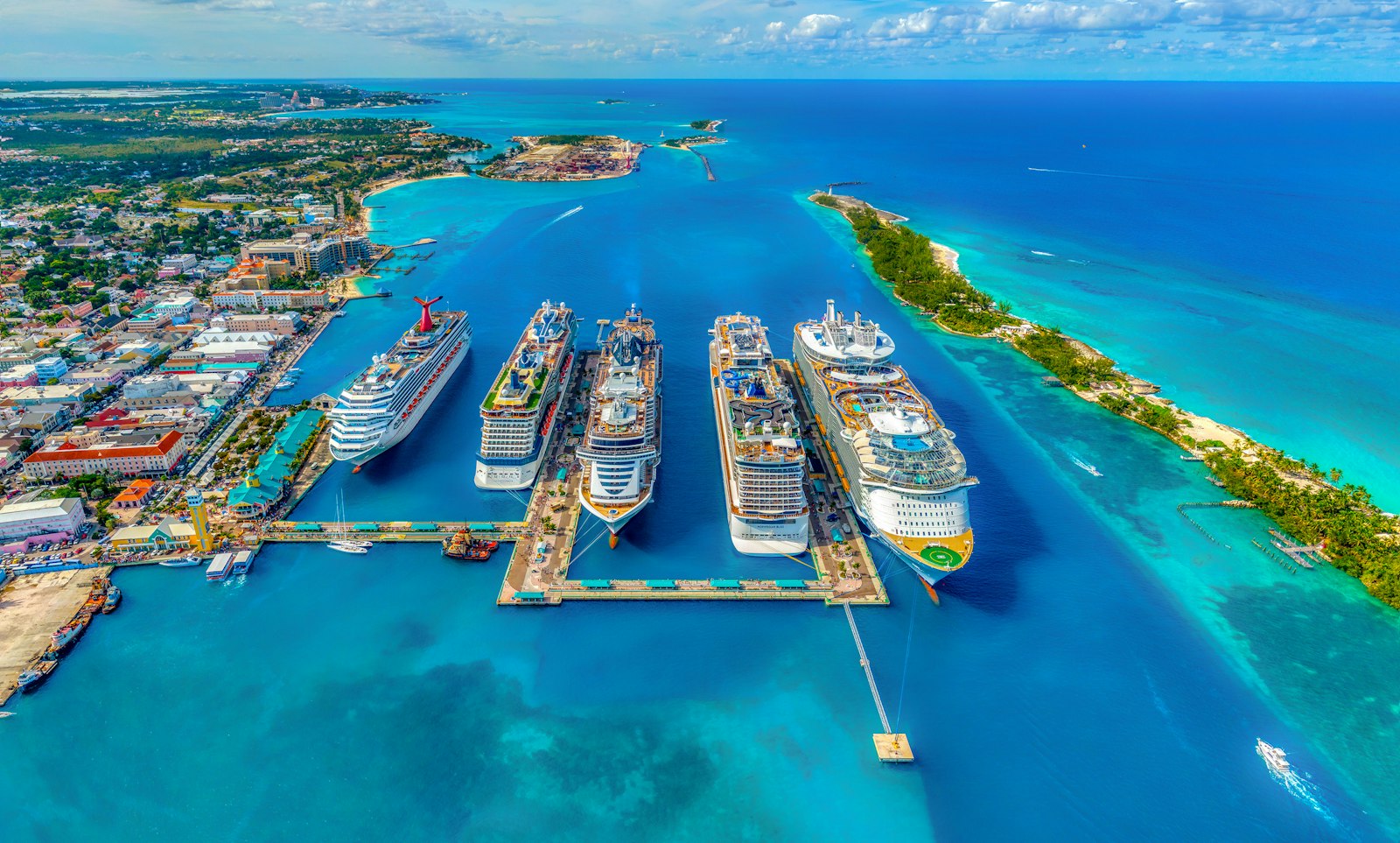
Ferries are among the oldest and most practical forms of transportation on earth — crossing straits, linking islands, and threading through fjords on every continent, they offer travelers a slower, often spectacular alternative to flying and an honest look at how millions of people actually move through their world.
Why Travel by Ferry?
Ferry travel sits in a category of its own. Unlike a cruise ship, a ferry is first and foremost transportation — it has a job to do, getting people and vehicles from one place to another efficiently. That utilitarian character is precisely what makes it appealing to travelers who want to experience a route rather than simply cover it.
Ferries carry cars, motorcycles, bicycles, and freight alongside foot passengers. They sail at hours that suit local life, not tourist schedules. The fellow passengers are often locals commuting, families relocating, truckers doing business. For anyone who finds airports alienating and highways monotonous, a ferry crossing can feel like genuine travel again.
There are practical advantages too. Many routes are competitively priced compared to flying, especially when you factor in the cost of checked baggage, airport transfers, and lost time. On overnight routes, a cabin replaces a night's hotel. And you arrive at a port, typically in or near a city center, rather than an airport on the periphery.
Major Ferry Regions of the World
Northern Europe
The Baltic and North Sea are among the most developed ferry corridors on the planet. Routes connect Scandinavia, Finland, Estonia, Germany, Poland, the UK, and the Netherlands, operated by large carriers running ships that rival small cruise liners in comfort. Overnight crossings with restaurants, bars, duty-free shopping, and comfortable cabins are the norm. The Stockholm–Helsinki route, for example, is famous for its social atmosphere as much as its scenery.
The Mediterranean
Greece alone has hundreds of inhabited islands and one of the world's most extensive domestic ferry networks. Boats of every size connect Athens' port of Piraeus with the Cyclades, Dodecanese, Ionian Islands, and Crete. Italy links the mainland to Sicily, Sardinia, and the Aeolian Islands, and international routes run to Croatia, Greece, Albania, and Tunisia. Spain's Balearic Islands — Mallorca, Menorca, Ibiza, and Formentera — are similarly ferry-dependent. Frequency and comfort vary enormously; high-speed catamarans trade scenery for speed, while conventional ferries are slower but steadier in rough conditions.
Southeast Asia
Island-hopping by ferry is fundamental to travel in Thailand, Indonesia, the Philippines, and Vietnam. Routes range from the well-organized and comfortable — Bali to the Gili Islands, Koh Samui to Koh Phangan — to the genuinely adventurous. Indonesia's Pelni shipping lines serve remote islands across the vast archipelago on a network that few international travelers use but locals depend on entirely. In the Philippines, where over 7,000 islands are spread across a vast sea, ferries and fast craft are simply how people get around.
North America
Alaska's Marine Highway System is one of the great ferry journeys in North America, threading through the Inside Passage and connecting Southeast Alaskan communities with each other and with Bellingham, Washington. British Columbia Ferries operates an extensive network along the Pacific coast. In the eastern United States, ferry services link Cape Cod and the Massachusetts islands, connect New York Harbor's boroughs and terminals, and run seasonally to offshore destinations up and down the coast.
South America and the South Pacific
Chile's fjord region in Patagonia is served by ferries that carry travelers and trucks through some of the most dramatic landscapes on earth, connecting roads that do not otherwise meet. In the South Pacific, inter-island ferries are often the only surface link between communities in Fiji, the Cook Islands, and French Polynesia.
Africa and the Middle East
The Strait of Gibraltar crossing between Spain and Morocco is one of the busiest short ferry corridors in the world, used by millions of travelers and Moroccan workers annually. Ferries cross the Red Sea between Egypt, Jordan, and Saudi Arabia, and Lake Victoria in East Africa is served by vessels connecting Kenya, Tanzania, and Uganda.
Types of Ferries and What to Expect
- Roll-on/roll-off (ro-ro) ferries: Vehicles drive aboard directly. Standard on most vehicle-carrying routes worldwide.
- High-speed catamarans and hydrofoils: Fast, wave-piercing hulls. Comfortable in calm water, rough in heavy seas, and often not suitable for vehicles. Crossing times can be dramatically shorter.
- Overnight cruise ferries: Common in Northern Europe and the Mediterranean. Offer cabins ranging from basic bunk-bed compartments to hotel-style en-suite rooms, plus dining, entertainment, and sometimes spas.
- Passenger-only river and harbor ferries: Frequent, short, and functional — the commuter bus of the water. Found in Hong Kong, Istanbul, Sydney, New York, and countless other cities.
- Cargo-passenger ships: Primarily freight vessels that carry a small number of passengers. Adventurous, slow, often inexpensive, and increasingly rare but still operating on remote routes.
Booking Ferry Tickets
Booking methods vary enormously by region and operator. In Northern Europe, major carriers offer sophisticated online booking well in advance — and for popular summer crossings, booking months ahead is genuinely recommended. In Greece and Southeast Asia, many travelers book a day or two before departure, or even at the port, though peak season can make this risky on the most popular routes.
For vehicle passages, early booking is almost always essential. Space for cars and camper vans is limited and fills quickly on popular summer routes.
Third-party booking platforms aggregate multiple operators on certain routes, particularly in Greece and the Mediterranean, and can simplify comparison. For others — particularly government-operated services like Alaska's Marine Highway or some Pacific island operators — booking must be done directly with the operator. Always confirm current schedules on the operator's official site before finalizing plans, as seasonal schedules change and routes are sometimes suspended.
Cabins, Seating, and Onboard Accommodation
Short crossings (under a few hours) typically offer only airline-style seating or open deck space. For crossings of four hours or more, particularly overnight voyages, accommodation choices multiply:
- Aircraft-type reclining seats: The budget option on many European overnight ferries. Perfectly adequate for a single night.
- Couchette or bunk cabins: Small shared cabins with four to six berths, often gender-mixed unless booked as a group. A significant step up in privacy.
- En-suite cabins: Private rooms with bathroom. Range from basic to genuinely comfortable, depending on the operator and vessel.
- Deck sleeping: On some Asian and Pacific routes, travelers spread mats or sleeping bags on open deck areas. Cultural norm on certain routes; check what is expected before assuming.
Food and Onboard Life
Large European ferry operators run multiple dining venues — buffet restaurants, cafeterias, bars, sometimes à la carte dining. Quality ranges from functional to surprisingly good. Bringing your own food is usually permitted and saves money on budget routes. On smaller ferries and in developing regions, options may be limited to a basic snack counter or vendors boarding at ports.
Use crossing time productively: the deck views on a Norwegian fjord crossing or an Aegean island passage are genuinely extraordinary. Bring a book, download offline entertainment for open-ocean routes with limited connectivity, and be prepared for limited or expensive onboard Wi-Fi.
Traveling with a Vehicle
Taking a car, van, or motorcycle on a ferry opens up itineraries that are otherwise impossible — driving through Patagonia and crossing fjords, touring Greek islands with a camper, or taking a road trip across Scandinavia. The process is straightforward but requires planning:
- Book vehicle space well in advance on popular routes.
- Arrive at the port with extra time — vehicle check-in closes well before passenger boarding.
- Vehicles are typically secured on the car deck during crossing; access is restricted at sea on most larger vessels.
- Confirm that your vehicle insurance covers sea crossings and the destination country. Many standard policies have exclusions worth checking.
- Cyclists and motorcyclists are usually accommodated, though policies on securing bikes vary — bring your own straps to be safe.
Safety and Practical Precautions
Modern ferry travel on reputable operators in developed countries is statistically safe. However, standards vary significantly across the world, and travelers should apply judgment on less-regulated routes.
- Note the location of life jackets and muster stations when you board — every time.
- On smaller vessels in regions with less oversight, observe whether the vessel appears well-maintained and whether crew behave professionally.
- Check weather forecasts before sailing on small open boats. Rough-weather crossings on exposed routes can be seriously uncomfortable or worse.
- Carry any essential medication in your hand luggage, not in a vehicle or checked bag inaccessible at sea.
- Travel insurance that covers sea transport is advisable; check policy details carefully, as some policies have exclusions.
Visas, Customs, and Border Crossings by Ferry
International ferry crossings cross borders just as flights do. You will go through passport control and customs — sometimes at the departure port, sometimes at arrival, and on some routes aboard the vessel itself. Requirements are identical to any other international entry: valid passport, applicable visas, and compliance with customs declarations and import limits.
For specific visa and entry requirements for any destination, consult official government immigration and foreign affairs sources — requirements change, and no third-party guide should be your final word on what documentation you need. TravelerPulse.pro's /visas section provides a starting point for researching Passport and Visa information by country.
Tips for First-Time Ferry Travelers
- Arrive at the port earlier than you think necessary. Port check-in processes — especially with vehicles — can be slow and confusing the first time.
- Pack a day bag with everything you need during the crossing: snacks, medication, entertainment, a layer for the air-conditioned interior or cool open deck.
- If you are prone to motion sickness, choose a cabin or seat amidships and low in the vessel where motion is least felt. Over-the-counter motion sickness remedies taken before boarding are more effective than those taken after symptoms begin.
- On overnight crossings, earplugs and an eye mask make sleep dramatically easier.
- Confirm the arrival port carefully — some cities have multiple terminals, and the ferry port may not be the most central one.
Frequently Asked Questions
How far in advance should I book a ferry?
It depends on the route and season. Major European overnight routes in July and August can sell out cabins months ahead. Short Mediterranean island hops in shoulder season can often be booked the day before. With a vehicle, always book as early as possible regardless of route.
Is ferry travel suitable for families with young children?
Generally yes, and on larger vessels it can be a genuinely enjoyable experience — open decks, dining options, and room to move around make a few hours at sea far more comfortable for children than an equivalent flight. Bring seasickness remedies and plan for rough-weather contingencies on exposed routes.
Can I sleep on an overnight ferry without booking a cabin?
On many European overnight ferries, reclining aircraft-style seats are available at a lower fare than a cabin, and travelers commonly sleep in them. Some vessels have lounge areas. The experience is less comfortable than a cabin but workable for a single night. On some routes, particularly in Asia, deck sleeping is common practice.
What happens if the ferry is cancelled due to weather?
Policies vary by operator. Most will offer a rebooking or refund if they cancel the sailing. If you cancel because of weather concerns when the operator is still sailing, refund terms depend on their conditions of carriage. Travel insurance that covers transport disruption provides a useful safety net.
Planning Your Ferry Journey
The most useful first step is research at the operator level — schedules, fares, and booking procedures all live on individual carrier websites, and the ferry industry is not yet as aggregated as airlines. For complex multi-leg itineraries, keeping your route organized in one place helps; My Travel Hub on TravelerPulse.pro is designed for exactly that kind of multi-segment journey planning.
Ferry travel rewards the traveler who treats the crossing itself as part of the destination. Standing on deck as a ferry threads through the Greek islands at dusk, or watching the forested coast of Alaska slide past at first light, is not transit. It is travel at its most elemental — and among the most memorable experiences a journey can offer.




