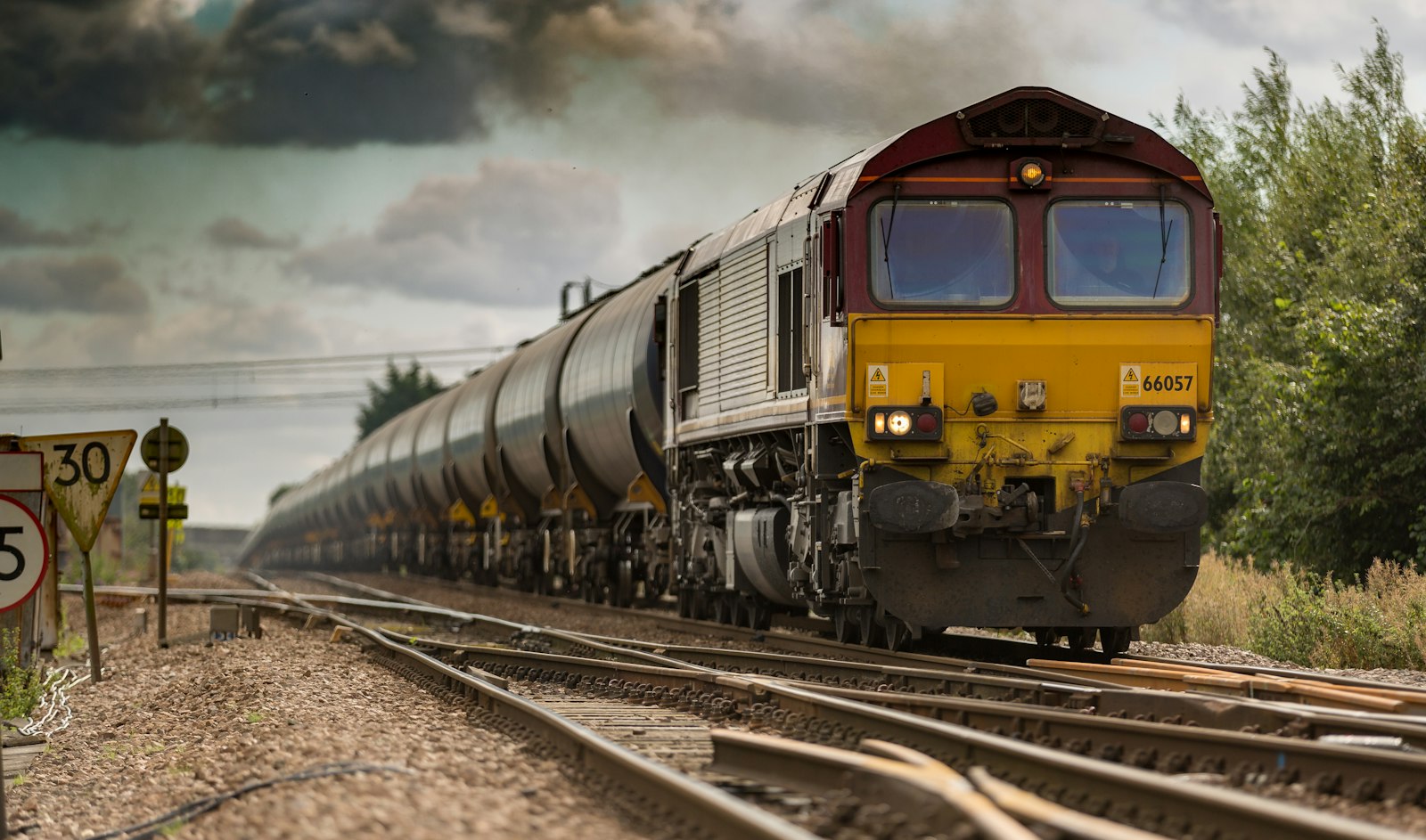
Pick the best transportation for each part of your journey — the TravelerPulse.pro guide to comparing air, rail, bus and road door to door.
One of the most important travel decisions is not simply where to go, but how to get there. For the same journey you may have several choices: air, rail, bus and road. The best option depends on more than price — travel time, airport transfers, luggage, comfort, scenery, flexibility, accessibility, border rules, weather, number of travelers and the location of your hotel can all change which choice makes the most sense.
Start With the Complete Journey
Do not compare a 1-hour flight with a 4-hour train and automatically assume the flight is faster. Compare Hotel → Airport → Check-in → Security → Flight → Baggage → Airport → Hotel against Hotel → Railway Station → Train → Railway Station → Hotel. The true comparison is door to door, not departure time to arrival time. This is one of the most important principles in transportation planning.
When Air Travel Makes Sense
Flying is usually most valuable when the distance is long: international journeys, long-distance domestic travel, crossing oceans or very large countries, reaching islands, and connecting regions without practical rail or road links.
Advantages of Air Travel
- Speed over long distances — for long routes, airplanes are difficult to beat
- Global reach — airlines connect cities that may have no direct rail or road connection
- International connectivity — major hubs connect travelers worldwide
- Long-distance efficiency — a 20-hour road journey may take only a few hours by air
Disadvantages of Air Travel
The scheduled flight time tells only part of the story. Consider travel to the airport, early arrival, check-in, security, immigration, boarding, baggage claim and transportation from the destination airport — plus baggage fees, seat-selection fees, delays, cancellations, missed connections, airport parking and long terminal walks. For shorter distances, these factors may eliminate much of the time advantage.
When Rail Makes Sense
Rail is often excellent between cities that are reasonably close together, especially when stations are near city centers. It works particularly well for intercity journeys, high-speed corridors, regional travel, scenic journeys, overnight travel, and travelers who prefer more space or whose airports are far from downtown.
Advantages of Rail Travel
- City-center convenience — many major stations are centrally located
- Less airport processing — train passengers often avoid lengthy airport-style procedures
- Freedom to move — get up and walk around more easily
- Scenic travel — see the landscape along the way
- Luggage convenience — often simpler than airline rules
- Useful travel time — work, read, eat, relax or use Wi-Fi during the journey
High-Speed Rail vs Flying
High-speed rail can be especially competitive on short and medium routes. Air: 30 minutes to the airport + 2 hours before departure + 1-hour flight + 30 minutes for baggage + 45 minutes to the city ≈ nearly five hours. Rail: 20 minutes to the station + 30 minutes early + 3-hour train + 10 minutes to the hotel ≈ about four hours. The slower scheduled transportation may actually provide the faster overall journey.
When Rail May Not Be Best
Rail may be less practical when no direct route exists, multiple transfers are required, trains are infrequent, fares are unusually expensive, stations are far from the destination, the journey crosses a very large distance, or overnight rail is uncomfortable for you. Compare the entire route.
When Bus Travel Makes Sense
Buses and coaches are among the most important transportation systems in the world and often reach places rail does not. Bus travel is especially useful for budget travel, rural destinations, smaller cities, airport connections, regional transportation, countries with limited rail, short intercity journeys and overnight travel.
Advantages of Bus Travel
- Lower cost — frequently one of the least expensive options
- Wide coverage — networks reach towns, villages and rural areas not served by trains or airlines
- Central terminals — bus stations may be conveniently located
- Direct routes — a bus can sometimes provide a direct journey where rail requires several transfers
When bus beats rail: if a destination has no railway station, a direct bus may be simpler than train → transfer → local bus, even if slower on paper.
Overnight Buses
Overnight coaches can save daytime travel hours and one night's accommodation — but consider seat comfort, rest quality, restroom availability, rest stops, safety and arrival time. Saving money is not always worthwhile if you arrive exhausted.
When Bus May Not Be Best
Bus travel may be less attractive when traffic is unpredictable, the trip is very long, roads are poor, comfort is important, you carry significant luggage, or frequent stops make the journey slow.
When Road Travel Makes Sense
Traveling by car offers something the other modes cannot provide as easily: freedom. Choose road travel when you want flexible schedules, scenic drives, rural destinations, national parks, multiple small stops, luggage flexibility, family convenience or remote-area access.
Advantages of Road Travel
- Door-to-door travel — often directly from hotel to destination without changing transportation
- Flexibility — stop when you want, change the route, stay longer, leave earlier
- Luggage — a vehicle can make transporting luggage easier
- Small towns and rural areas — reach destinations public transportation may not serve
- Groups — one vehicle may compare favorably with multiple train or airline tickets
Road Trips Are Different
Sometimes the purpose is not to reach the destination as quickly as possible — the road itself becomes the experience: scenic viewpoints, small towns, restaurants, beaches, national parks, historic sites, roadside attractions. In this situation, driving offers something air travel cannot.
When Road Travel May Not Be Best
Driving can become difficult when traffic is heavy, parking is expensive, roads are unfamiliar, driving is on the opposite side, you are tired, weather is poor, city centers restrict vehicles, or rental fees are high. A car that provides freedom in the countryside can become a burden in a major city.
Consider a Mixed Transportation Trip
You do not have to choose one mode for the entire journey — often the best itinerary combines several: Flight → Train → Rental Car → Ferry → Bus. Example for Seattle → London → Paris → rural France → Amsterdam → Seattle: fly Seattle–London, take the train London–Paris, rent a car for rural France, take rail or air to Amsterdam, then fly home. Each mode solves a different transportation problem.
Distance Matters
- Very short distance — walking, local transit, taxi or rideshare
- Short intercity distance — rail or bus can be excellent
- Medium distance — compare rail, air, bus and road carefully
- Long distance — air often becomes more practical
These are not fixed rules — geography and infrastructure matter.
Compare Total Travel Time and Total Cost
For each option, calculate the complete chain: air (airport transfer + processing + flight + baggage + destination transfer), rail (station transfer + waiting + train + destination transfer), bus (terminal transfer + waiting + bus + destination transfer), road (pickup + driving + stops + parking).
Cost should include more than the ticket: air adds baggage, seat, airport transportation, parking and meals; rail adds reservations and station transportation; bus may add luggage fees; road adds rental, fuel, insurance, tolls, parking and one-way fees. A $50 flight is not necessarily cheaper than a $90 train if the airports require $60 of ground transportation.
Consider the Travelers
Groups: four train tickets may cost more than one rental car — but the vehicle adds fuel, parking, tolls and insurance; compare total group cost. Children: think about car seats, strollers, luggage, rest stops, toilets, boarding and seat assignments — a car provides flexibility, a train lets children move around, a short flight reduces travel time. Senior travelers: prefer options that reduce long walks, stairs, transfers, luggage handling and standing — a direct train can be easier than an airport journey. Accessibility: check every part of the journey — station access, wheelchair-accessible buses, airport assistance, accessible rental vehicles, elevators and advance-assistance requirements. Accessibility can matter more than price or travel time.
Consider Luggage, Weather and Season
Luggage: air has strict limits; rail is flexible but you carry it yourself; buses store large bags under the coach; a car offers the greatest flexibility. Weather: storms and snow delay flights; flooding disrupts rail; traffic affects buses; on the road you personally face snow, ice, rain, fog and mountain conditions. Season: a road trip may be wonderful in summer but difficult in winter; a scenic rail journey shines in autumn; a ferry may be seasonal; a flight may be the only practical option in certain conditions.
Consider Timing, Terminals and Connections
A cheap 5:30 AM departure may require a 3:00 AM hotel exit; a 9:00 AM train might make a far more comfortable day; a midnight arrival may mean expensive ground transportation. Always check where the terminal actually is: how far is the airport from the city, is the railway station central, where is rental-car pickup? Direct travel is usually easier — every connection introduces delay risk, luggage movement, navigation and stress. Self-created connections on separate tickets deserve extra buffer time: a cheap itinerary becomes expensive if one missed connection requires buying another ticket.
Consider Borders, Documents and the Environment
International surface travel can involve passport control, visas, customs, vehicle documents and rental-car restrictions — and train, bus and road crossings may operate differently from airports. Transportation type does not eliminate visa requirements: entry visas, transit visas, electronic authorizations and passport validity can apply by train, bus, car and ferry too. Check official Passport & Visa information. A rental contract may prohibit crossing a border even when immigration allows it. Travelers who care about emissions can also weigh the relative environmental impact — actual impact varies with distance, vehicle type, passenger load, electricity source and number of travelers.
Quick Head-to-Head Comparisons
Air vs Rail
- Choose air when distance is long, rail is unavailable, or the time difference is substantial
- Choose rail when stations are central, high-speed rail exists, door-to-door time is competitive, or you value comfort and scenery
Air vs Bus
- Choose air when the distance is very long and time matters
- Choose bus when cost is the priority, the route is short or medium, the bus is direct, or airports are inconvenient
Air vs Road
- Choose air when distance is long and the destination is well served
- Choose road when you want flexibility, multiple stops, rural destinations, or the journey itself matters
Rail vs Bus
- Choose rail when speed, comfort, frequency and convenient stations matter
- Choose bus when cost matters, the destination lacks rail, or a direct bus avoids train transfers
Rail vs Road
- Choose rail for city-center-to-city-center travel, where parking is difficult, or when you don't need a vehicle at the destination
- Choose road for rural exploring, several people, substantial luggage, or multiple stops
Bus vs Road
- Choose bus when you don't want to drive, parking is difficult, or cost is important
- Choose road when flexibility matters, public transportation is limited, or you want to stop along the route
Create a Simple Comparison Score
For every option, rate 1–5: travel time, total cost, convenience, comfort, flexibility, luggage, accessibility and scenic value. The winner does not have to score highest in every category — choose what matters most to you. For City A → City B: the flight is fast in the air but has a long airport process and higher transfer cost; the train is longer on paper but central and comfortable; the bus is cheapest but slowest; the rental car is flexible but needs parking. Different travelers may reasonably choose different options.
Do Not Automatically Choose the Cheapest — or the Fastest
The lowest price may come with a long connection, overnight travel, distant airport, expensive taxi, baggage fees and lost sightseeing time. Ask: what am I getting for the extra money? Sometimes paying a little more saves an entire day. Equally, the fastest scheduled option may involve a stressful transfer, early departure, multiple terminals and extra cost — a slightly longer journey may be much more enjoyable.
Use My Travel Hub to Compare the Journey
TravelerPulse.pro's My Travel Hub can organize multimodal journeys — Day 1 flight, Day 3 high-speed train, Day 6 rental car, Day 9 airport coach — so travelers see the complete itinerary instead of separate reservations.
The TravelerPulse Transportation Principle
The best transportation option is rarely determined by one factor. Consider time, cost, convenience, comfort, connections, luggage, accessibility and experience — and the answer can change from one segment of the same trip to the next.
Conclusion
You do not need to be loyal to one mode of transportation. Fly when flying makes sense. Take the train when rail is easier. Use the bus when it offers the best connection. Drive when the road itself is part of the journey. A well-planned trip often uses all four.
Choose the route. Compare the options. Make the connection. Enjoy the journey. — TravelerPulse.pro™