
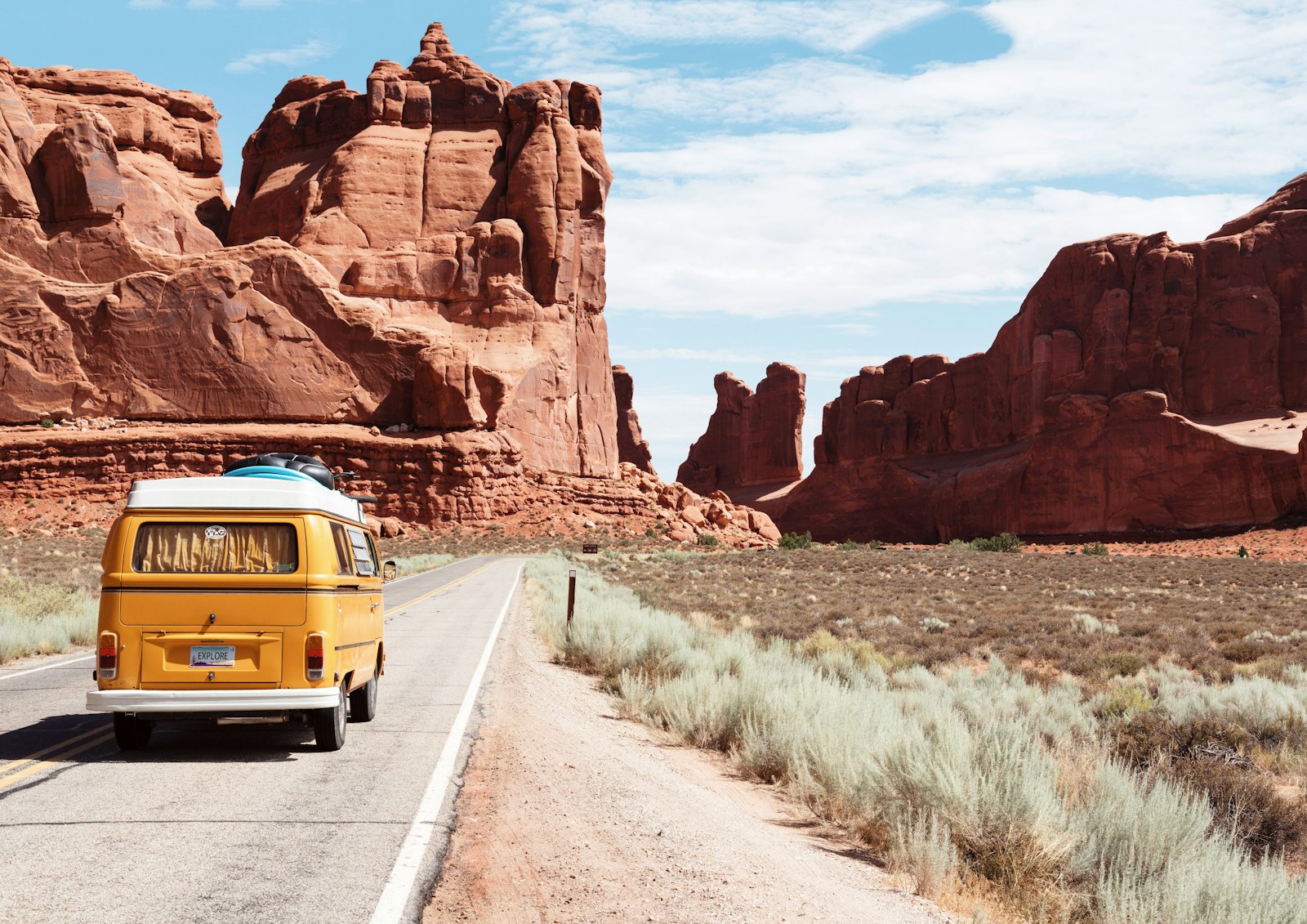
RV and campervan travel puts your home on wheels — offering freedom, flexibility, and access to landscapes that hotels simply can't match — but a successful trip depends on choosing the right vehicle, planning your route wisely, and understanding the practical realities before you leave the driveway.
Why RV and Campervan Travel?
Few travel formats give you more autonomy. You control your schedule, your meals, your pace, and your destination. Wake up beside a mountain lake, drive to a desert canyon by afternoon, and sleep under a sky full of stars — all without checking in or out of anything. That freedom is the central appeal, and for many travelers it becomes a lifelong habit.
It is also an increasingly practical choice. Campsite fees are generally far lower than hotel rates, cooking your own food cuts costs dramatically, and a single vehicle serves as both transport and accommodation. Families, couples, solo travelers, and retirees all find versions of this lifestyle that work for them.
Understanding the Different Types of Rigs
The terminology can be confusing at first. Here is a plain-language breakdown of the main categories.
- Class A Motorhome: The largest self-propelled option, built on a bus or commercial truck chassis. Spacious living areas, full kitchens, and multiple sleeping zones — but significant fuel consumption and limited access to narrow roads or tight campgrounds.
- Class B Motorhome (Campervan): Built on a standard cargo van chassis. Easier to drive and park than larger rigs, more fuel-efficient, and usable as a daily vehicle. Living space is compact; ideal for one or two people who prioritize mobility over space.
- Class C Motorhome: A middle ground — built on a truck cab chassis with a distinctive over-cab sleeping area. More maneuverable than a Class A, with more living space than a Class B.
- Travel Trailer: Towed behind a separate truck or SUV. You unhitch at the campsite, leaving your tow vehicle free for day trips. Requires a vehicle with adequate towing capacity and some practice backing up.
- Fifth-Wheel Trailer: A large towed trailer that hitches into the bed of a pickup truck via a special coupling. Generally more stable than a standard travel trailer and can offer very generous living space.
- Pop-Up / Tent Trailer: A collapsible towed unit that folds down for transport and opens up at camp. Low cost, lightweight, but minimal weather protection and insulation compared to hard-sided units.
Renting vs. Buying
If you are new to RV travel, renting before buying is almost always the right move. A single week-long rental trip will teach you more about what you actually want — and what you can live without — than any amount of online research.
Rental companies operate in most regions, and peer-to-peer platforms now allow private owners to rent out their personal rigs, sometimes at more competitive rates. Compare total costs carefully: many rentals add mileage fees, generator hours, and cleaning charges on top of the base daily rate.
Buying makes sense once you travel frequently enough that rental costs would exceed ownership costs, factoring in purchase price, insurance, storage, maintenance, and depreciation. The used RV market is broad — a pre-purchase inspection by a qualified RV technician is strongly recommended before any purchase.
Planning Your Route
RV route planning differs from ordinary road trip planning in important ways.
- Vehicle height and weight restrictions: Many bridges, tunnels, and roads have posted limits. Know your rig's exact height (with any roof accessories), weight, and length before you go. GPS units and apps designed specifically for RVs can route around low clearances automatically — standard car navigation cannot.
- Fuel stops: Larger rigs have large tanks but poor fuel economy. Plan fuel stops in advance in remote areas; not every station can accommodate a 40-foot motorhome or a truck-and-trailer combination.
- Daily driving distance: Experienced RV travelers often recommend limiting driving days to four to six hours. Driving a large vehicle on unfamiliar roads is more taxing than driving a car, and rushed arrivals at campsites — especially for first-time backers — create stress.
- Seasonal road conditions: Mountain passes close in winter. Desert roads become dangerous in extreme summer heat. Check current conditions through national or regional road authority websites before your departure date.
Finding and Booking Campsites
Campsites range from full-service RV parks with electrical, water, and sewer hookups to primitive dispersed camping on public land with no facilities at all. Understanding the spectrum helps you plan appropriately.
- Full hookup sites: Provide shore power (electricity), fresh water connection, and sewer or dump access. The most convenient option, particularly for longer stays or beginners still learning their systems.
- Partial hookups: Typically electric and water only. You will need to use a campground dump station for waste tanks before leaving.
- Dry camping / boondocking: No hookups at all. You rely entirely on your rig's batteries, fresh water tank, and holding tanks. Requires more planning but often puts you in far more scenic and uncrowded locations. Many national forests, Bureau of Land Management areas in the United States, and comparable public lands elsewhere permit free dispersed camping within specific rules.
National and state park campgrounds in popular destinations book out months in advance during peak season — sometimes the day reservations open. Build your itinerary around confirmed bookings rather than planning to find space on arrival. Private campground apps and membership clubs (such as Good Sam or Harvest Hosts, among many others) can expand your overnight options considerably.
Understanding Your RV's Systems
Modern RVs are miniature homes. Knowing how the core systems work prevents minor inconveniences from becoming trip-ending problems.
- Electrical: Most RVs have a 12-volt DC system (batteries) for lights and basic functions, and a 120-volt AC system for appliances when connected to shore power or running a generator. Solar panel additions are increasingly popular for extending off-grid capability.
- Fresh water: Filled from a potable water source. Tank capacity determines how long you can camp without a refill. Use only hoses rated safe for drinking water.
- Gray water tank: Collects wastewater from sinks and the shower. Dump at designated stations — never on the ground.
- Black water tank: Collects toilet waste. Requires careful management; always dump the black tank before the gray tank so gray water rinses the sewer hose. Use RV-specific toilet paper that breaks down quickly.
- Propane: Powers the stove, oven, water heater, and often the refrigerator in many rigs. Keep a spare tank or know where exchange stations are along your route. Never run propane appliances in enclosed spaces without proper ventilation.
Safety on the Road
Size and weight change the driving dynamic significantly compared to a passenger car.
- Allow much greater following distances — stopping distances for heavy rigs are considerably longer.
- Make wide turns, especially right turns, to avoid jumping curbs with rear wheels.
- Wind and passing trucks create lateral forces that require active steering correction, particularly with high-profile vehicles and trailers.
- Carry a carbon monoxide detector and a working smoke alarm inside the RV. These are non-negotiable safety items.
- Check tire pressure before every driving day. Blowouts on heavy vehicles are more dangerous and more common than on cars, especially in high temperatures.
- If towing, verify that sway control, weight distribution hitches, and safety chains are properly connected every single time you hitch up.
Costs and Budgeting
RV travel can be economical, but it is easy to underestimate the full cost picture. Key budget categories include:
- Fuel — often the largest single variable cost, especially for larger motorhomes
- Campsite fees — highly variable depending on location type and hookup level
- RV insurance — separate from auto insurance; required and worth shopping carefully
- Maintenance and repairs — budgeting a contingency fund for unexpected repairs is essential
- Food and supplies — one genuine area of savings versus hotel travel
- Membership programs and apps — many travelers recoup the cost quickly through discounted sites
Track your spending trip by trip. Many experienced RVers find their costs stabilize and drop significantly once they learn their rig's habits and settle into efficient routines.
Crossing Borders and International Travel
Taking an RV or campervan across international borders adds meaningful complexity. Vehicle insurance requirements, registration, emissions standards, and road regulations all vary by country. Some countries restrict or require advance permits for foreign-registered commercial-sized vehicles.
Customs rules for the goods you carry inside your rig — food, alcohol, tools, equipment — also apply. For accurate, current requirements, always check the official government immigration and customs websites for every country on your itinerary well before departure. TravelerPulse.pro's /visas section can help you identify the right official sources for passport and entry requirements by destination.
Environmental Responsibility
The places that make RV travel so rewarding depend on travelers treating them with care.
- Practice Leave No Trace principles: pack out all waste, minimize campfire impact, and leave natural objects where you find them.
- Never dump gray or black water outside of designated facilities.
- Stay on established roads and sites — off-road driving outside designated areas causes lasting soil and vegetation damage.
- Respect fire restrictions, which change frequently with weather and seasonal conditions. Check with local land management agencies before building any campfire.
Staying Connected and Organized
Many RV travelers work remotely or simply want reliable connectivity for navigation and communication. Mobile data plans, signal boosters, and campground Wi-Fi all have limitations — building in flexibility for connectivity dead zones is wise rather than assuming you will always be online.
Keeping your trip organized — reservations, maintenance records, route notes, and packing checklists — becomes easier when everything lives in one place. My Travel Hub on TravelerPulse.pro is built for exactly this kind of multi-stop, multi-variable journey management.
Frequently Asked Questions
Do I need a special driver's license to operate an RV?
License requirements vary by country, state, and province, and often by the gross vehicle weight rating of the specific rig. In many jurisdictions a standard passenger vehicle license covers smaller motorhomes and campervans, while very large Class A motorhomes or heavy truck-trailer combinations may require a commercial or endorsement class license. Check the relevant motor vehicle authority for your home jurisdiction and any destinations you plan to drive through.
How do I find RV-friendly campgrounds and overnight stops?
Dedicated RV campground apps, membership club directories, and national or state park reservation systems are the primary tools. Many travelers also use satellite imagery to scout potential boondocking locations on public land, then verify permissibility through official land management agency websites or by calling ranger stations directly.
What is the best time of year for RV travel?
It depends entirely on where you are going. National parks and coastal destinations peak in summer and book far in advance. Desert areas are often more pleasant in spring and fall. Many snowbirds use RVs to follow warm weather year-round, heading south in winter and north in summer. Shoulder seasons — spring and fall in most temperate regions — often offer lighter crowds and reasonable weather at the cost of some unpredictability.
Can I boondock (camp without hookups) on public land for free?
In many countries, specific categories of public land permit dispersed camping at no charge for a limited number of consecutive nights, after which you must relocate. Rules vary significantly by land management agency, country, and even specific land unit. Always verify current rules directly with the managing agency before arriving, as regulations change and some areas are subject to temporary closures.
The Open Road Awaits
RV and campervan travel rewards patience and preparation in equal measure. The learning curve — understanding your systems, developing driving confidence, mastering the logistical choreography of booking, routing, and managing resources — flattens quickly with experience. Most travelers find that after one or two trips, the routines become second nature and the focus shifts entirely to the journey itself. Start with a rental, drive conservatively, book your first few nights in advance, and give yourself room to slow down. The best moments on an RV trip are almost always the unplanned ones.




