Overview
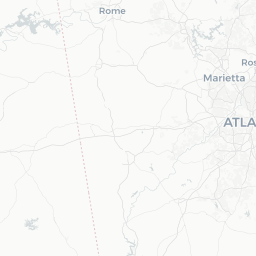
Atlanta is the capital and largest city of Georgia, sitting in the foothills of the Appalachian Mountains at roughly 1,000 feet elevation — higher than most people expect of a Southern city. With a population of around 510,000 in the city proper and several million more in the broader metro area, it functions as the economic and cultural anchor of the American Southeast.
The city carries deep historical weight: it was a central battleground during the Civil War, burned in 1864, and rebuilt; it was also the birthplace of Martin Luther King Jr. and a critical organizing ground of the American civil rights movement. That history is present and taken seriously, with major institutions dedicated to preserving and interpreting it.
Modern Atlanta is home to the global headquarters of companies including Coca-Cola, Delta Air Lines, Home Depot, and CNN, which gives the city an unusually international and business-oriented character for a Southern U.S. capital. This translates practically for visitors: the airport is enormous and well-connected, the hotel infrastructure is substantial, and the restaurant and arts scenes are genuinely cosmopolitan.
Neighborhoods vary significantly in character. Midtown is dense with museums, galleries, and nightlife. Buckhead skews toward upscale dining and shopping. The Old Fourth Ward — birthplace of Dr. King — is historically significant and now also home to much of Atlanta's contemporary food and creative scene. Inman Park, Ponce City Market, Decatur, and Virginia-Highland each add further texture. The 22-mile Atlanta BeltLine trail system, still expanding, physically connects many of these communities and has become a defining feature of how Atlantans move through and experience their city.
Before You Go
Visas and Entry
Atlanta is in the United States. Entry requirements vary significantly depending on your nationality, travel purpose, and length of stay. Check TravelerPulse's Visas section for general guidance, and verify current requirements directly with the U.S. Department of Homeland Security (dhs.gov) or the nearest U.S. embassy or consulate before traveling.
Weather and What to Pack
Atlanta has a humid subtropical climate. Summers (June–August) are hot and humid, with temperatures frequently in the 88–95°F (31–35°C) range, and afternoon thunderstorms are common. Winters are mild compared to much of the U.S. but can bring occasional ice storms that disrupt the city significantly — pack layers if visiting December through February. Spring and fall are the most comfortable seasons and the best times to walk the BeltLine or explore outdoor attractions.
Health
No vaccinations are required to enter the United States, but standard travel health precautions apply. Tap water is safe to drink. The U.S. healthcare system is expensive for uninsured visitors — travel health insurance is strongly recommended. Confirm your coverage before departure.
Practical Prep
- Download rideshare apps (Uber, Lyft) and the MARTA app before arrival — they're essential for getting around.
- Atlanta is a sprawling city; plan your accommodations near the neighborhoods or attractions most relevant to your itinerary.
- If you plan to drive, be aware that traffic congestion is a significant issue, particularly on I-285 and I-85 during morning and evening rush hours.
Getting There
By Air
Hartsfield-Jackson Atlanta International Airport (ATL) is consistently ranked among the world's busiest airports by passenger volume and serves as the primary hub for Delta Air Lines. It offers nonstop connections to destinations across North America, Europe, Latin America, Asia, and beyond. The airport is located approximately 10 miles south of downtown. MARTA's Gold and Red rail lines connect the airport directly to downtown, Midtown, and Buckhead — a straightforward and affordable option for most visitors. Rideshare and taxi services are also available curbside.
By Train
Amtrak serves Atlanta's Brookwood Station with the Crescent route, which runs between New York Penn Station and New Orleans. Train travel to Atlanta can be scenic but is slow compared to flying; verify current schedules and journey times on amtrak.com.
By Car
Atlanta sits at the junction of several major interstates — I-75, I-85, and I-20 — making it accessible by road from most of the Southeast. Note that driving into central Atlanta and parking can be challenging and costly; if arriving by car, confirm parking options at your accommodation in advance.
Getting Around
MARTA Rail
Atlanta's Metropolitan Atlanta Rapid Transit Authority (MARTA) operates four rail lines — Red, Gold, Blue, and Green — forming a network that covers the airport, downtown, Midtown, Buckhead, and several other key points. For visitors staying in or near these corridors, MARTA is a practical and cost-effective choice. Reloadable Breeze Cards are available at station vending machines. Verify current fares and schedules at itsmarta.com.
Buses
MART bus routes extend coverage significantly beyond the rail network, but service can be infrequent on many lines. Buses are most useful if you're traveling to a specific destination not near a rail station and have time flexibility.
Rideshare
Uber and Lyft operate throughout Atlanta and are the most convenient option for reaching neighborhoods off the rail lines — including many of the city's best restaurants, parks, and attractions. Surge pricing applies during large events (Atlanta hosts major conventions, Falcons and Braves games, and concerts regularly).
Walking and Cycling
Atlanta is not comprehensively walkable as a whole, but specific pockets are very pedestrian-friendly. The Atlanta BeltLine's Eastside and Westside trails are excellent for walking and cycling, connecting parks, markets, and restaurants. Lime and other dockless scooter and e-bike services operate in parts of the city — check current availability locally.
Car Rental
A rental car is advisable if you plan to visit attractions outside the urban core — Stone Mountain, the Chattahoochee National Recreation Area, or suburban destinations. Budget extra time for traffic, particularly on weekday mornings and evenings.
Where to Stay
Atlanta has a large and varied accommodation market, from budget-friendly chain hotels near the airport to full-service luxury properties in Midtown and Buckhead. The city also has a strong short-term rental presence (Airbnb, Vrbo) in residential neighborhoods like Inman Park, Grant Park, and Ponce-Highland.
Neighborhood Considerations
- Downtown / Centennial Olympic Park area: Convenient for the Georgia Aquarium, World of Coca-Cola, and CNN Center; well-served by MARTA. Can be quiet after business hours.
- Midtown: A good base for walkability — close to Piedmont Park, the High Museum of Art, the Fox Theatre, and a dense restaurant and bar scene.
- Buckhead: Upscale hotels and dining; practical if attending business events or preferring quieter, more residential surroundings.
- Old Fourth Ward / Inman Park: Closer to the BeltLine's Eastside Trail, Ponce City Market, and many of the city's most talked-about restaurants. Fewer large hotels but strong short-term rental options.
Verify current rates and availability directly with properties or booking platforms, as Atlanta's event calendar (conventions, sporting events, concerts) can cause significant price fluctuations.
Things to See & Do
Civil Rights and History
- Martin Luther King Jr. National Historic Site: The preserved Sweet Auburn neighborhood block where Dr. King was born, lived, preached, and is buried alongside Coretta Scott King. The site includes his birth home, Ebenezer Baptist Church, and the King Center. Managed by the National Park Service — verify current hours and tour availability at nps.gov/malu.
- National Center for Civil and Human Rights: A downtown museum connecting the American civil rights movement to contemporary global human rights struggles. Check current hours and admission at civilandhumanrights.org.
- Jimmy Carter Presidential Library and Museum: Archives and exhibits on the 39th U.S. president, set in a 30-acre garden. Verify details at jimmycarterlibrary.gov.
Science, Nature, and Family
- Georgia Aquarium: One of the largest aquariums in the world, featuring whale sharks, beluga whales, manta rays, and extensive marine habitats. Booking tickets in advance online is strongly recommended; verify current hours and pricing at georgiaaquarium.org.
- Zoo Atlanta: Home to giant pandas and a range of African savanna animals; located in Grant Park adjacent to historic Cyclorama. Verify details at zooatlanta.org.
- Fernbank Museum of Natural History: Natural history museum with significant dinosaur exhibits, an IMAX theater, and a forest trails system. Check fernbankmuseum.org for current information.
Arts and Culture
- High Museum of Art: The Southeast's leading fine arts museum, with strong collections in American and European art, photography, and folk art. Check thehigh.org for current exhibitions and hours.
- Fox Theatre: A magnificently preserved 1929 Moorish-Egyptian movie palace that now hosts touring Broadway productions, concerts, and film screenings. Worth seeing even if you're just admiring the exterior.
- Atlanta Symphony Orchestra: Performs at Symphony Hall in Woodruff Arts Center, Midtown. Check aso.org for current season programming.
Iconic Experiences
- World of Coca-Cola: An immersive museum tracing the global story of the soft drink, with product tastings. Located near Centennial Olympic Park; verify details at worldofcoca-cola.com.
- Atlanta BeltLine: The 22-mile multi-use trail loop (still expanding) connecting parks, public art installations, restaurants, and neighborhoods. The Eastside Trail between Inman Park and Ponce City Market is the most developed and active stretch.
- Piedmont Park: Atlanta's central green space in Midtown, with a lake, sports fields, a farmers market (seasonal), and skyline views. Free to enter.
- Ponce City Market: A converted 1920s Sears warehouse turned mixed-use market, with food halls, independent retailers, and rooftop amusements. Free to browse.
Food & Drink
Atlanta's food scene has earned national attention over the past decade, with a particular strength in contemporary Southern cooking — chefs here take regional traditions seriously while pushing them in new directions. The city also has a broad international food landscape reflecting its diverse population.
Southern Staples
Dish traditions worth seeking out include fried chicken (Atlanta has a fierce local debate about the best version), shrimp and grits, pimento cheese, collard greens, and peach cobbler. Meat-and-three diners — where you choose a protein and three sides — are a distinctly Southern institution still well-represented in Atlanta's neighborhoods.
Waffle House, the 24-hour diner chain born in the Atlanta suburb of Avondale Estates in 1955, is genuinely embedded in the regional culture and worth a visit for context as much as for the food.
Contemporary and Neighborhood Dining
The stretch of the BeltLine around Inman Park, Ponce City Market, and the Old Fourth Ward has the highest concentration of widely reviewed independent restaurants. Decatur — a walkable city just east of Atlanta proper — has a particularly strong independent dining scene. Buford Highway, running northeast from the city, is nationally recognized among food writers for its dense corridor of authentic Vietnamese, Korean, Chinese, Mexican, and other international restaurants.
Drinking Culture
Atlanta has a mature craft beer scene, with several local breweries operating taprooms throughout the city — verify current ones locally, as openings and closures are frequent. Georgia peach-based cocktails and bourbons appear frequently on menus. Note: Georgia's liquor laws have historically been restrictive, though many have relaxed in recent years; Sunday sales and specific licensing rules can vary by establishment and county, so verify locally if this is relevant to your plans.
Shopping
Atlanta offers a wide range of shopping, from major malls to independent boutiques and markets.
Buckhead contains some of the city's most upscale retail, including Phipps Plaza and Lenox Square — two large malls with luxury and mainstream brand anchors. Verify current tenant rosters locally.
Ponce City Market in the Old Fourth Ward combines a food hall with a curated mix of independent and national retailers in a handsome historic building. The BeltLine Eastside Trail connects it to other shopping destinations.
Little Five Points and adjacent Inman Park are the city's bohemian retail districts, with vintage clothing stores, record shops, independent booksellers, and locally made goods.
Decatur has a walkable downtown with independent boutiques, bookstores, and specialty food shops worth an afternoon browse.
For locally made goods, the Atlanta BeltLine Art on the Atlanta BeltLine installations are free to view, and local artists sell work at various markets throughout the year — check local event listings for current farmers and art markets, which are seasonal.
Practical Information
Emergency Services
In any emergency in the United States, dial 911 for police, fire, or medical assistance.
Electricity
The U.S. uses 120V / 60Hz current with Type A and Type B outlets (two flat pins, with or without a round grounding pin). Visitors from countries with different standards will need an adapter and possibly a voltage converter for sensitive electronics.
Tipping
Tipping is a standard and expected practice in the United States. In restaurants, 18–20% of the pre-tax bill is a common baseline for table service; tip less only for genuinely poor service, and more for exceptional service. Bartenders typically receive $1–2 per drink or 15–20% of the tab. Rideshare drivers, hotel housekeeping, and other service workers also customarily receive tips — verify what's appropriate for each context.
Connectivity
Wi-Fi is widely available in hotels, cafes, restaurants, and public spaces. U.S. mobile networks (AT&T, T-Mobile, Verizon) have strong coverage in Atlanta. International visitors should check international roaming plans with their carrier or consider purchasing a local SIM or eSIM.
Sales Tax
Georgia charges state sales tax, and Fulton County (where most of Atlanta sits) adds a local rate on top. Restaurant meals and most retail purchases will include tax not shown in listed prices — this is standard across the U.S. Verify the current combined rate locally.
Accessibility
MART stations and most major attractions are ADA-accessible. The BeltLine's paved trail sections are generally accessible. Verify specific accommodation and attraction accessibility needs directly with each venue.
Safety
Atlanta is a large American city with a range of neighborhoods, and safety conditions vary meaningfully by area and time of day. The neighborhoods most visited by tourists — downtown around Centennial Olympic Park, Midtown, Buckhead, Inman Park, and the BeltLine — are generally active, well-trafficked, and reasonably safe during the day and evening.
As with any major city, exercise standard awareness: avoid displaying valuables openly, be conscious of your surroundings particularly late at night, and stay in well-lit, populated areas after dark in unfamiliar neighborhoods. Vehicle break-ins in parking areas — including near popular attractions — are reported with some frequency; avoid leaving bags or valuables visible in parked cars.
For current, specific safety advisories, consult the Atlanta Police Department's public resources (atlantapd.org) and check recent traveler reviews for the specific neighborhoods you plan to visit. If you experience an emergency, dial 911.
Local Culture & Etiquette
Atlanta occupies a complex and significant place in American history and culture. It was the birthplace of Martin Luther King Jr. and a central stage for the civil rights movement of the 1950s and 1960s — a history that is not merely commemorated but actively engaged with in the city's museums, churches, and public life. Visitors should approach this history with seriousness and curiosity; the National Historic Site, the National Center for Civil and Human Rights, and Ebenezer Baptist Church are not simply tourist attractions.
Southern hospitality — a genuine cultural norm of warmth and directness with strangers — is noticeable in everyday interactions in Atlanta, though the city is large and cosmopolitan enough that it doesn't feel uniform or performative. Expect friendliness in restaurants, shops, and public spaces.
Atlanta is also a majority-Black city with a historically significant African American professional and cultural class — a fact that has shaped the city's music, food, politics, film industry, and institutions in ways that are evident and worth understanding before you arrive. The city has produced a disproportionate share of influential American hip-hop and R&B music, and that cultural current is visible in the city's creative life.
Atlanta hosts a substantial LGBTQ+ community, particularly concentrated in the Midtown neighborhood, with a long-established scene and annual Pride events. Check local listings for current events and venues.
Football (NFL Atlanta Falcons), baseball (MLB Atlanta Braves, who play in the suburb of Cumberland), basketball (NBA Atlanta Hawks), and soccer (MLS Atlanta United) all have significant local followings — attending a game is a legitimate way to engage with the city's social life, though major events affect traffic and accommodation prices significantly.